.jpg)
Payer policy changes can have a direct impact on healthcare reimbursement. Updates to coverage rules, reimbursement rates, coding requirements, medical necessity criteria, prior authorization, and claims processing can change whether a claim is paid, how much is paid, or how quickly payment is received.
For healthcare organizations, the challenge is not simply keeping up with payer policies. It is understanding how those changes affect actual reimbursement.
A policy update may lead to more denials, but it can also create a less obvious problem: claims that continue to be paid but at a lower amount than expected. Identifying these patterns is an important part of protecting reimbursement and maintaining financial performance.
What are payer policy changes?
Payer policy changes are updates to the rules health insurance companies use to determine how healthcare services are covered, processed, and reimbursed.
These changes can include:
- Reimbursement rate and fee schedule updates
- Changes to covered or non-covered services
- New medical necessity requirements
- Coding and modifier changes
- Prior authorization requirements
- Documentation requirements
- Claim submission and processing rules
- Changes to payment methodologies
- Updates to clinical policies
Payer policies can vary by payer, plan, state, specialty, procedure, and provider type. That complexity makes it difficult for RCM teams to understand the potential financial impact of every change.
How do payer policy changes affect healthcare reimbursement?
Payer policy changes can affect reimbursement at nearly every stage of the revenue cycle. A change can influence whether a claim is paid, how much the provider receives, or how much effort is required to collect the payment.
1. Policy changes can increase claim denials
New payer requirements can cause previously payable claims to be denied.
For example, a payer may introduce a new prior authorization requirement for a particular service. If the required authorization is not obtained, a claim may be denied even when the service itself is covered.
Other policy changes involving medical necessity, documentation, coding, or claim submission can create similar issues.
2. Policy changes can lead to underpayments
Not every reimbursement problem appears as a denial.
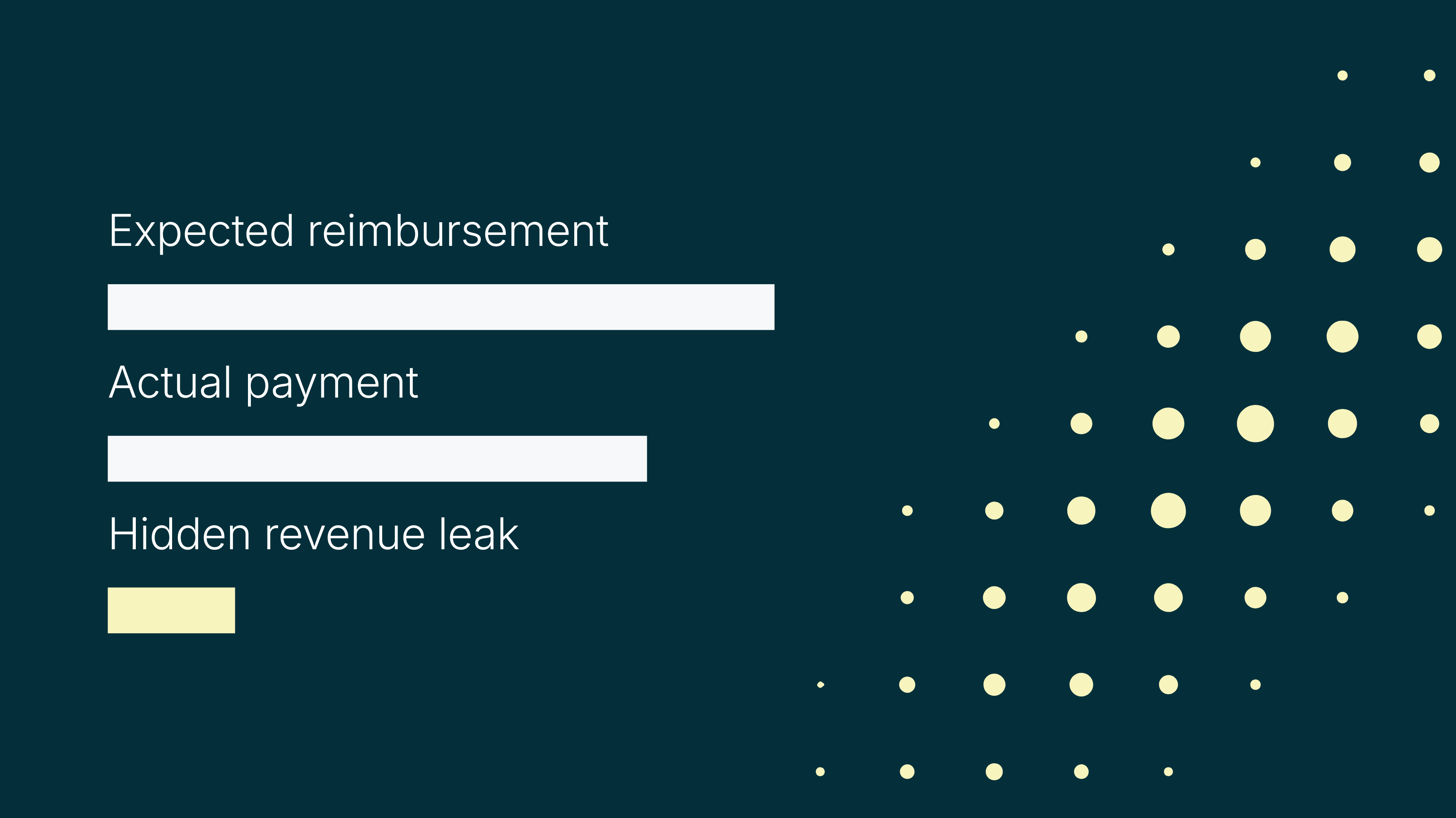
A payer may change its reimbursement methodology or payment policy and begin paying less for a particular service. The claim is still marked as paid, but the reimbursement does not match what the provider expected.
This can be difficult to detect because paid claims typically leave the revenue cycle team with fewer obvious signals to investigate.
For example, if a payer consistently reimburses a procedure $50 below the expected amount, that difference may seem small on an individual claim. Across thousands of claims, however, the financial impact can become significant.
3. Policy changes can increase accounts receivable
New payer requirements can create additional claim edits, documentation requests, appeals, and manual follow-up.
As more claims require intervention, they can take longer to resolve and contribute to higher accounts receivable and increased RCM workload.
4. Policy changes can affect coding and documentation
Payers may update the codes, modifiers, diagnoses, or documentation required for reimbursement.
These requirements can vary across payers, making it difficult for RCM teams to maintain consistent processes. A claim that is processed successfully by one payer may face a denial or reduced payment from another because of different requirements.
5. Policy changes can create reimbursement variability
Payer policy changes can make reimbursement less predictable.
Two claims for the same service may have different payment outcomes based on the payer, plan, date of service, provider, or applicable policy. Without the right visibility into payment patterns, it can be difficult to determine whether that variation is expected or represents a systematic reimbursement issue.
Why are payer policy changes difficult for RCM teams to manage?
The volume and complexity of payer information make policy changes difficult to manage manually.
Healthcare organizations may work with dozens or hundreds of payer plans, each with different reimbursement rules and requirements. Policies can also change throughout the year, creating a continuous stream of information for RCM teams to monitor.
More importantly, knowing that a policy changed is only the beginning.
RCM teams need to understand:
- What changed?
- Which services are affected?
- Which providers or locations are affected?
- When does the change take effect?
- Which claims could be impacted?
- How could reimbursement change?
- Are actual claims and payments showing evidence of that change?
The final question is particularly important.
A payer policy may look relatively minor on paper but have a significant financial impact once applied across a large volume of claims.
How can healthcare organizations identify the impact of payer policy changes?
Effective payer monitoring goes beyond tracking policy updates. Healthcare organizations can connect payer intelligence with claims and payment data to understand what those changes mean financially.
This can help RCM teams identify patterns such as:
- A sudden increase in denials for a specific procedure
- A payer beginning to reimburse a service at a lower amount
- New denial patterns appearing after a policy change
- Increased requests for documentation
- Changes in payment behavior for specific plans
- Systematic differences between expected and actual reimbursement
This distinction is important because reimbursement issues are not always visible at the individual claim level.
A single unexpected payment may be an isolated exception. A consistent payment difference across hundreds of claims may indicate a broader payer behavior or policy change.
What is reimbursement integrity?
Reimbursement integrity is the ability to ensure that healthcare organizations are reimbursed accurately for the care they provide.
That means looking beyond whether a claim was paid. It also means understanding whether the payment was accurate, whether payer behavior has changed, and whether systematic reimbursement issues are creating revenue leakage.
This is particularly important as payer policies become more complex.
A traditional denial-focused approach may identify claims that were rejected. A broader reimbursement integrity approach also looks at claims that were accepted and paid but may not have been reimbursed as expected.
How can providers protect revenue when payer policies change?
Healthcare organizations can take several steps to reduce the financial impact of payer policy changes.
Monitor payer changes continuously
Track updates to reimbursement policies, coverage requirements, coding rules, and authorization requirements so teams can identify potentially meaningful changes earlier.
Connect payer changes to claims and payment data
Understanding which claims, procedures, providers, and locations are affected helps organizations move from awareness to action.
Monitor both denied and paid claims
Denials are an important signal, but they are not the only one. Analyzing paid claims can reveal unexpected changes in reimbursement that would otherwise go unnoticed.
Establish expected reimbursement benchmarks
Comparing actual payments against expected reimbursement can help identify meaningful payment variances and emerging patterns.
Look for systematic patterns
The goal should not be to investigate every payment anomaly individually. Identifying recurring patterns can help RCM teams focus on the reimbursement issues with the greatest financial impact.
Automate reimbursement monitoring
Automation can help organizations continuously analyze claims and payment data, surface emerging patterns, and reduce the amount of manual work required to identify reimbursement issues.
How do payer policy changes contribute to revenue leakage?
Payer policy changes can become a source of revenue leakage when their financial impact is not identified and addressed.
The leakage may appear as denied claims, reduced reimbursement, delayed payments, or missed opportunities to recover incorrect payments. In some cases, the underlying issue is not that the provider billed incorrectly. It is that payer requirements or payment behavior changed and the organization did not detect the impact quickly enough.
This is why payer monitoring and reimbursement intelligence are increasingly important components of revenue cycle management.
Frequently Asked Questions
How do payer policy changes affect revenue cycle management?
Payer policy changes can affect claim acceptance, reimbursement amounts, payment timing, and the amount of work required to resolve claims. They can increase denials or create underpayments and other forms of revenue leakage.
Can payer policy changes cause underpayments?
Yes. Changes to reimbursement methodologies, fee schedules, or payment policies can result in providers receiving less than their expected reimbursement, even when claims are processed and paid.
Can a payer policy change cause denials?
Yes. New requirements for prior authorization, medical necessity, documentation, coding, or claim submission can cause claims to be denied when the updated requirements are not met.
How can RCM teams identify the financial impact of payer policy changes?
RCM teams can analyze payer policy updates alongside claims, denial, and payment data. Looking for changes in reimbursement patterns can help identify which policies are having a meaningful financial impact.
Why should healthcare organizations monitor paid claims?
A paid claim is not necessarily an accurately reimbursed claim. Monitoring paid claims can help identify systematic underpayments and other reimbursement issues that may not appear in traditional denial reporting.
What is the difference between denial management and reimbursement integrity?
Denial management focuses primarily on claims that were rejected or not paid. Reimbursement integrity takes a broader view, examining whether claims are reimbursed accurately across the entire payment lifecycle, including identifying underpayments and changes in payer behavior.
The Bottom Line
Payer policy changes can affect healthcare reimbursement in ways that are both obvious and difficult to detect.
Some changes lead to denials or additional claim requirements. Others show up more quietly as changes in payment amounts across large volumes of paid claims.
For RCM teams, the key is to connect payer intelligence with actual claims and payment data. By monitoring both denied and paid claims and looking for systematic changes in reimbursement, healthcare organizations can identify revenue leakage earlier and strengthen reimbursement integrity as payer policies evolve.